A smooth video stream depends on much more than having a fast internet connection. When thousands or millions of people try to watch online videos, the system delivering that content has to handle enormous amounts of data without creating unnecessary delays. This is where content delivery networks play an important role.
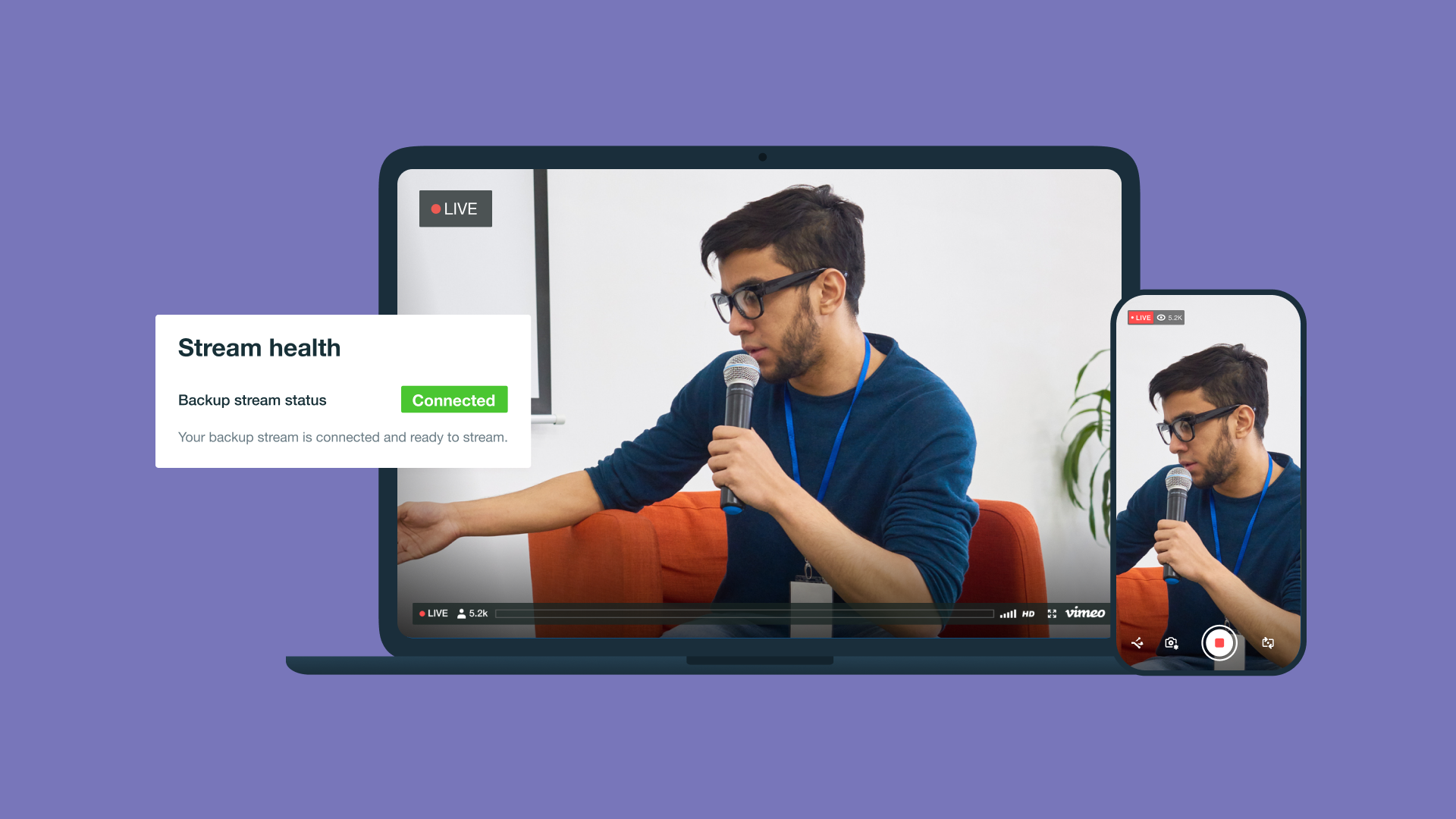
A content delivery network, commonly called a CDN, is a distributed network of servers designed to deliver digital content efficiently to users in different locations. Instead of sending every video request to one central server, a CDN can store and deliver copies of content from servers positioned closer to viewers.
For video streaming, this distributed approach can improve delivery speed, reduce pressure on origin infrastructure, and help services handle sudden increases in demand. It can also support adaptive streaming, large video files, live broadcasts, and viewers spread across different regions.
Understanding how CDNs work helps explain why major streaming platforms can deliver the same content to audiences around the world while maintaining a relatively consistent viewing experience.
What a Content Delivery Network Does
A CDN consists of multiple servers distributed across different locations.
These servers are often called edge servers because they operate closer to the end users than a central origin server would.
When a viewer requests content, the CDN can determine an appropriate location from which to deliver it. If the requested content is already available at that location, it may be delivered without contacting the original server for every individual request.
This reduces the distance that data needs to travel and can make content delivery more efficient.
The Origin Server Still Matters
A CDN does not necessarily replace the original server.
The origin server remains the main source of the content. It may store the original video files, encoded versions, playlists, metadata, and other resources required by the streaming platform.
The CDN acts as a distribution layer between the origin and viewers.
When content needs to be delivered, the CDN can retrieve it from the origin and make it available through its distributed network.
This separation allows the origin infrastructure to focus on managing content while edge servers handle much of the viewer traffic.
Why Distance Matters
Data traveling across the internet does not move instantly.
The physical distance between a viewer and the server, along with the route taken through different networks, can affect latency and delivery performance.
If a viewer in one region has to retrieve every video segment from a server located very far away, the connection may involve a longer network path.
A CDN can place cached copies of frequently requested content closer to viewers.
Shorter network paths can reduce latency and make repeated requests more efficient.
CDNs Help Reduce Origin Traffic
Imagine a popular video that receives millions of views.
Without an effective distribution system, a central server could receive an enormous number of requests for the same media segments.
A CDN can serve cached content from its edge locations instead.
This means the origin server does not necessarily have to send the same data independently to every viewer.
Reducing this repeated traffic can make the overall streaming infrastructure more scalable.
Caching Is Central to CDN Performance
Caching allows a CDN to temporarily store frequently requested content.
When a viewer requests a video segment, the CDN checks whether that content is already available at an appropriate edge location.
If it is, the segment can often be delivered directly from the cache.
If it is not available, the CDN may retrieve it from the origin server and then store it according to its caching rules.
Later requests can potentially use the cached copy.
This process is especially valuable for popular content that many viewers request repeatedly.
Video Segments Work Well With Caching
Modern streaming systems commonly divide videos into smaller segments.
This structure works naturally with CDN caching.
Instead of caching one enormous video file, a CDN can cache individual media segments.
As viewers watch the video, their players request these segments in sequence.
Popular segments can therefore be served repeatedly from edge locations without requiring the entire video to be retrieved from the origin for every viewer.
CDNs Support Adaptive Streaming
Adaptive streaming allows a player to select different video quality levels based on network conditions.
A streaming service may provide several versions of the same content at different bitrates and resolutions.
A CDN can distribute these different versions to viewers.
The player can request the appropriate segments according to current conditions.
If bandwidth decreases, the player may request lower-bitrate segments. When conditions improve, it may request higher-quality segments.
The CDN’s role is to efficiently deliver whichever version the player requests.
Better Handling of Large Video Files
Video content can consume significant amounts of bandwidth.
High-resolution files are especially demanding because they contain more data.
A distributed CDN allows large amounts of video traffic to be spread across many servers rather than concentrated in one location.
This distribution can make it easier for a streaming service to serve high-resolution content to large audiences.
Reducing Latency for Viewers
Latency refers to delays in communication between systems.
For on-demand video, a small amount of latency may not always be noticeable. However, lower latency can still improve how quickly playback starts and how responsive certain interactions feel.
For live video, latency can become much more important.
A CDN designed for streaming can help reduce unnecessary network distance and improve the efficiency of media delivery.
Improving Video Start Times
Viewers generally expect a video to begin quickly after pressing play.
The player first needs to obtain enough information and media data to begin playback.
If the required content can be retrieved efficiently from a nearby edge location, the initial requests may complete more quickly.
This can contribute to shorter startup times.
However, startup performance also depends on encoding, player behavior, network conditions, server configuration, and many other factors.
A CDN is an important part of the system, but it is not the only factor.
Handling Sudden Traffic Spikes
Online video traffic can change dramatically.
A popular event, breaking news broadcast, sports stream, or newly released video can attract a huge audience within a short period.
If all requests were directed toward one server, the sudden increase could create serious performance problems.
A CDN can distribute traffic across multiple edge locations.
This allows the infrastructure to absorb demand across a wider collection of servers.
Live Streaming Creates Different Challenges
Live video differs from ordinary on-demand content.
A recorded video can often be cached well in advance because its content does not change.
A live stream is continuously producing new media segments.
The CDN must therefore deliver newly generated segments quickly while maintaining the required timing.
This makes caching strategies, network performance, and infrastructure capacity especially important for live events.
CDNs Can Help With Global Audiences
A website or streaming platform may have viewers in many countries.
One central server location cannot be equally close to every viewer.
A distributed CDN provides multiple delivery points across different regions.
A viewer may therefore receive content from an edge location that provides a more efficient network path.
This geographic distribution is particularly valuable for platforms serving international audiences.
Network Congestion Can Affect Streaming
Internet traffic is not always predictable.
During busy periods, certain network paths may experience congestion.
A CDN cannot eliminate congestion across the entire internet, but it can provide alternative delivery locations and network paths.
This flexibility can improve the chances of efficient delivery.
Some CDN providers also operate extensive network infrastructure and maintain connections with multiple internet networks, helping content move efficiently toward users.
CDNs Can Improve Scalability
Scalability means being able to handle increasing demand without requiring the entire system to be redesigned.
Video platforms need strong scalability because audience size can change quickly.
A CDN allows streaming traffic to be distributed across many servers.
As demand increases, the distributed infrastructure can handle more requests than a single-server approach would normally support.
This is one reason CDNs are so important for large streaming platforms.
Security Benefits Can Also Matter
Many CDN services provide security features alongside content delivery.
These can include traffic filtering, protection against certain network attacks, access controls, and encrypted connections.
Security capabilities vary between providers and configurations.
For streaming platforms, these features can help protect the infrastructure responsible for delivering valuable content.
Security and delivery are therefore often managed together.
CDNs Can Deliver More Than Video
Although video streaming is a major use case, CDNs can also deliver other website resources.
Images, JavaScript files, stylesheets, fonts, software downloads, and other static content can also be distributed through edge servers.
For a streaming website, this means the CDN may support both the video player experience and the surrounding website.
Efficient delivery of these supporting resources can contribute to faster page loading and smoother interaction.
The Viewer Usually Does Not Notice the CDN
One interesting feature of CDN technology is that viewers rarely interact with it directly.
A person normally opens a website or application and presses play.
Behind the scenes, the platform determines where the required resources should come from.
The viewer does not need to manually select an edge server.
This automated process is one of the main reasons CDN technology can operate effectively at large scale.
What Happens When Content Is Not Cached
A CDN cannot always have every video segment stored at every edge location.
If requested content is missing from a particular cache, the CDN may need to retrieve it from another location or the origin server.
This is sometimes described as a cache miss.
Once the content has been retrieved, the CDN may store it according to its caching policy.
Future requests can then potentially be served more efficiently.
Cache Rules Affect Video Delivery
Not every type of content should be cached for the same amount of time.
Streaming systems can use caching rules based on the type of media and how frequently it changes.
Older segments from an on-demand video may remain useful for longer.
Live streaming segments have a much shorter useful lifetime because new content is constantly being produced.
Effective caching policies help balance performance, storage, freshness, and bandwidth usage.
CDNs Do Not Automatically Fix Every Streaming Problem
It is important to understand the limits of CDN technology.
A CDN cannot turn a very slow internet connection into a fast one.
It cannot repair poorly encoded video or eliminate problems caused by an overloaded device.
It also cannot guarantee perfect playback under every network condition.
If a streaming platform has inefficient encoding, poor player design, insufficient capacity, or other infrastructure problems, adding a CDN alone may not solve everything.
The best results come from combining a strong CDN with efficient encoding, reliable servers, capable players, and good network engineering.
Why CDNs Are Important for 4K Streaming
Ultra-high-resolution video requires substantial bandwidth.
A large audience watching 4K content simultaneously can create enormous traffic demands.
Distributing this content through multiple edge locations helps reduce the concentration of traffic at the origin.
CDNs can therefore play an important role in making high-quality streaming practical for large audiences.
The viewer still needs enough bandwidth and a capable device, but the delivery infrastructure is better prepared to handle the demand.
CDN Performance Depends on More Than Geography
A nearby server is useful, but physical distance is not the only factor.
Network routing, connectivity between providers, server capacity, congestion, peering arrangements, and caching behavior can all affect performance.
An edge server that is geographically close may not always provide the best route.
Modern CDN systems use various methods to direct requests toward suitable delivery locations.
The Relationship Between CDN and Streaming Player
The player and CDN work together indirectly.
The player determines which media segments it needs.
The CDN responds by delivering those segments.
If network conditions change, the player may request a different quality level.
The CDN then delivers the requested version if it is available.
This interaction continues throughout playback.
The player manages playback decisions while the CDN focuses on efficiently delivering the requested resources.
A Simple Example
Consider a popular educational video watched by viewers in several countries.
The original video is stored with the streaming provider.
The provider creates several versions with different resolutions and bitrates.
The video segments are made available through the CDN.
A viewer presses play, and the player requests the necessary playlist and initial media segments.
The CDN directs those requests toward suitable edge infrastructure.
If the required segments are already cached, they can be delivered from the edge location.
If not, the CDN retrieves them through the appropriate backend path.
As playback continues, the player requests additional segments and may change quality depending on available bandwidth.
The viewer simply sees a video playing on the screen, while the CDN handles much of the distribution work behind the scenes.
Why Streaming Platforms Depend on Distributed Delivery
Video is one of the most bandwidth-intensive forms of online content.
A single image or web page may require relatively little data compared with a long high-resolution video.
When thousands of viewers request videos simultaneously, the amount of transferred data can become enormous.
A distributed delivery architecture allows streaming services to move this traffic closer to viewers and spread it across many infrastructure points.
This makes large-scale video delivery more manageable.
Conclusion
Content delivery networks are an important part of modern video streaming because they move frequently requested media closer to viewers and distribute traffic across many servers. Through caching, geographic distribution, scalable infrastructure, and efficient network routing, CDNs can help improve startup times, reduce pressure on origin servers, and support large audiences.
They are especially valuable for high-resolution video, popular on-demand content, international audiences, and live events where traffic can increase rapidly.
A CDN does not work alone. Smooth streaming also depends on video encoding, adaptive bitrate technology, reliable network connections, capable playback devices, and well-designed streaming infrastructure. Together, these systems allow a video to travel from its storage location through a distributed network and ultimately reach the viewer’s screen with minimal interruption.